


 English
 Español
 中文简体
中文简体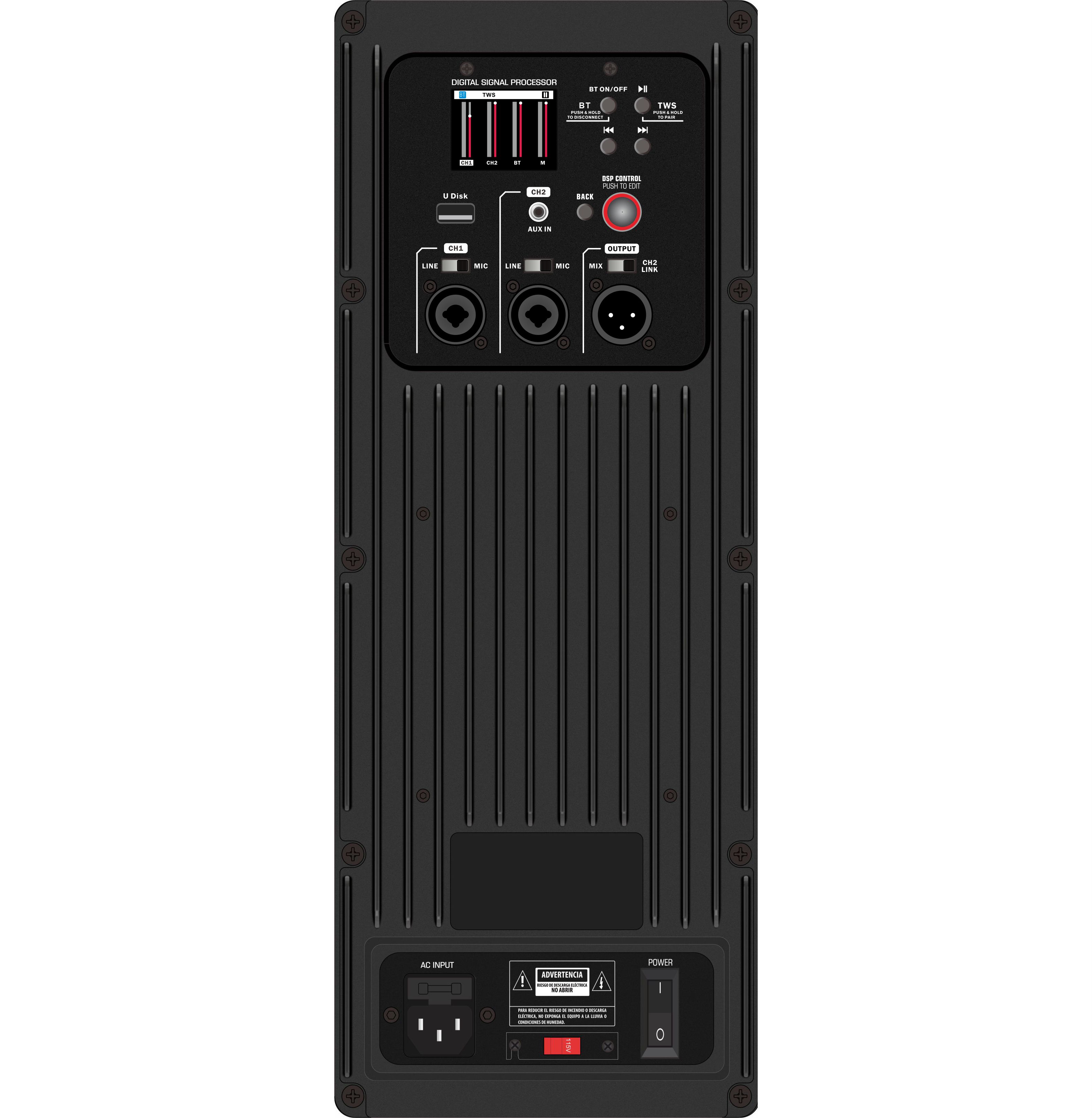


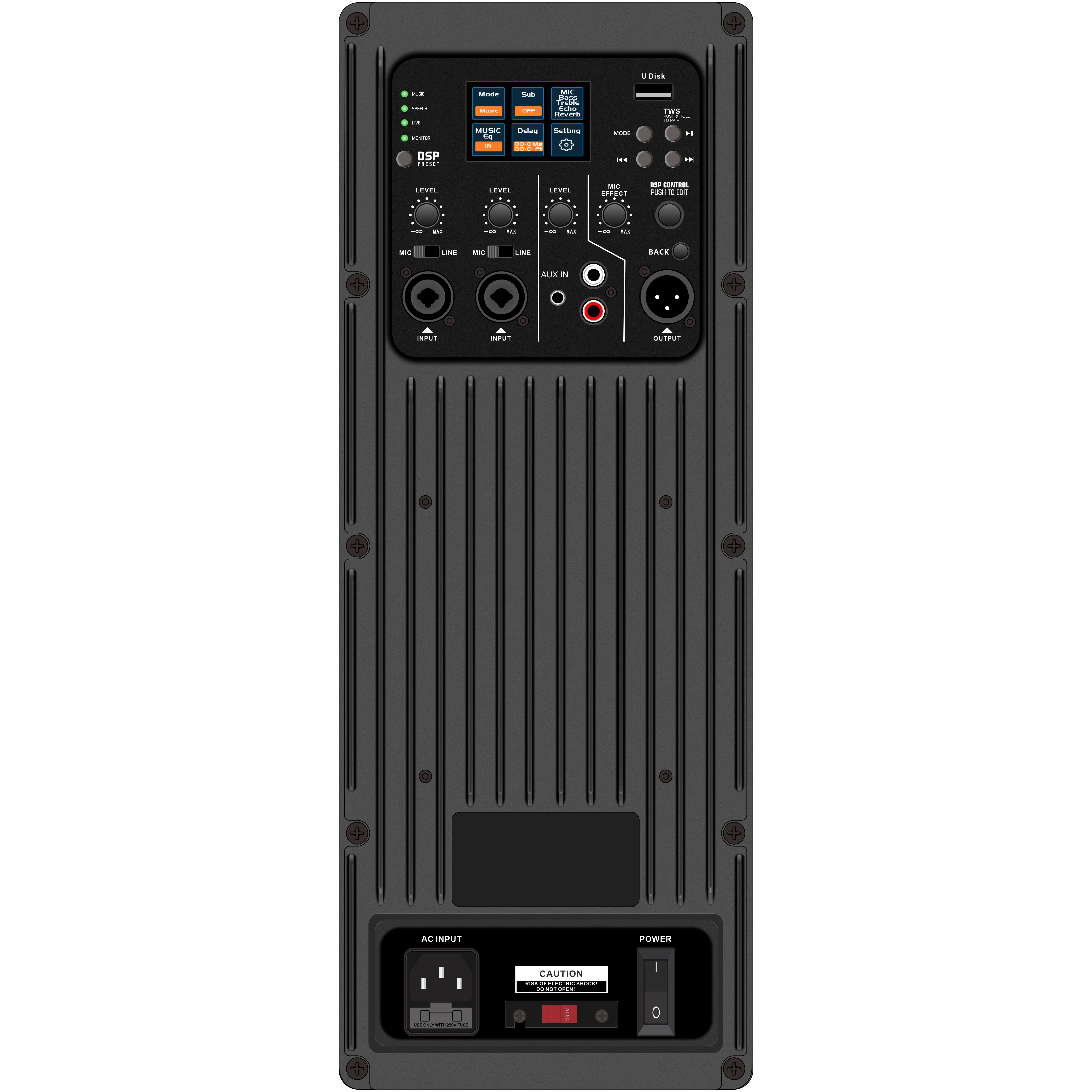
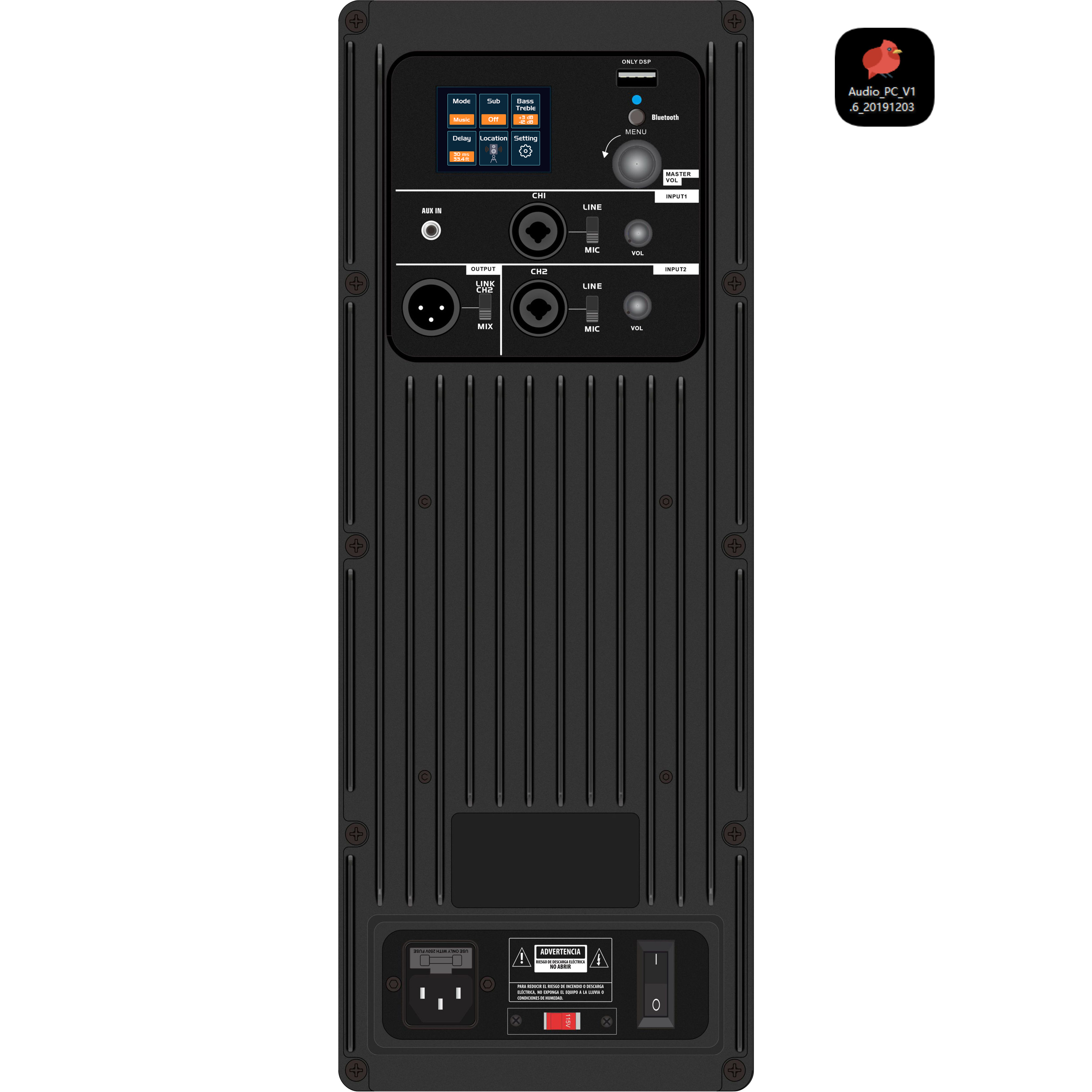
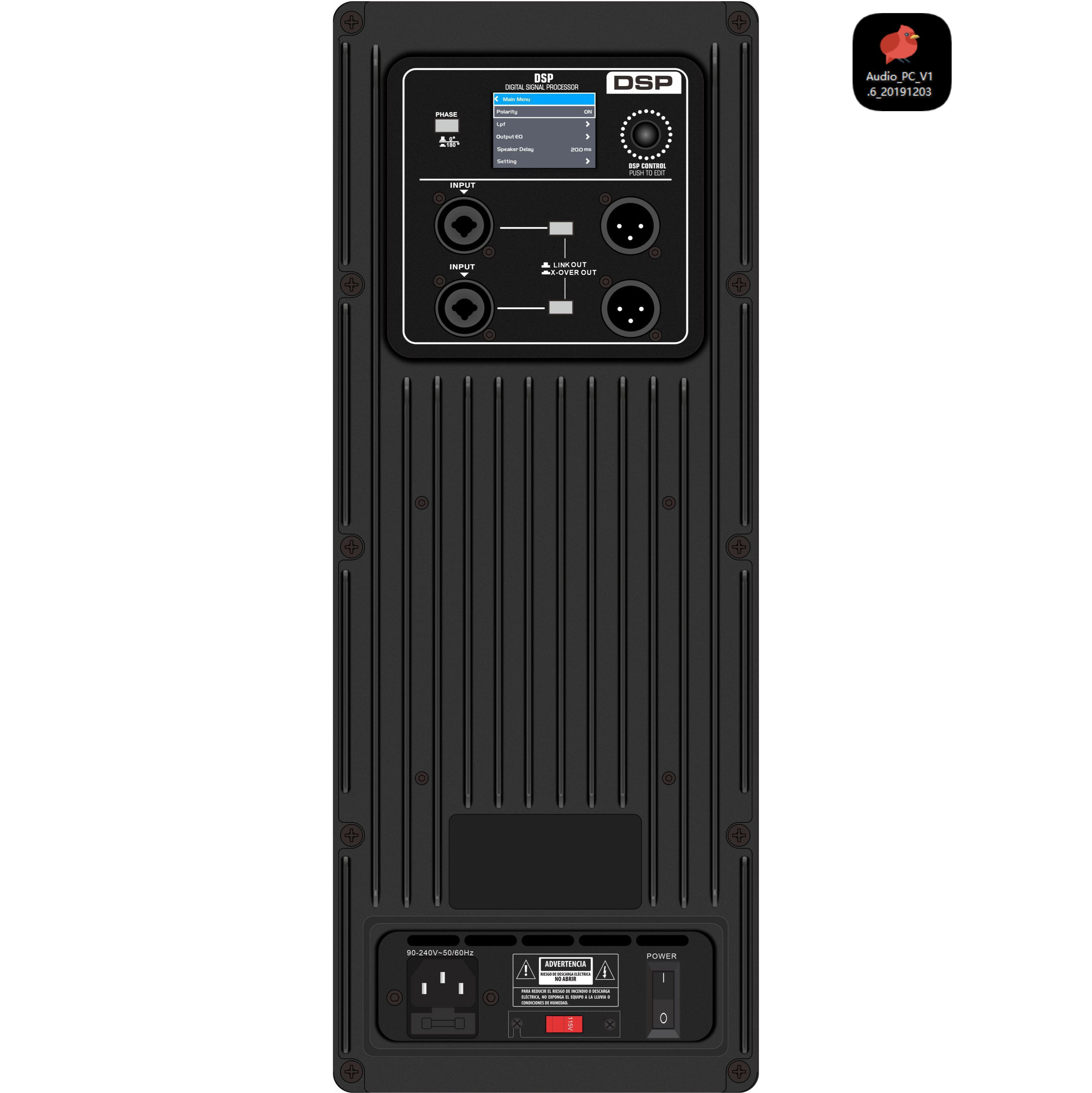
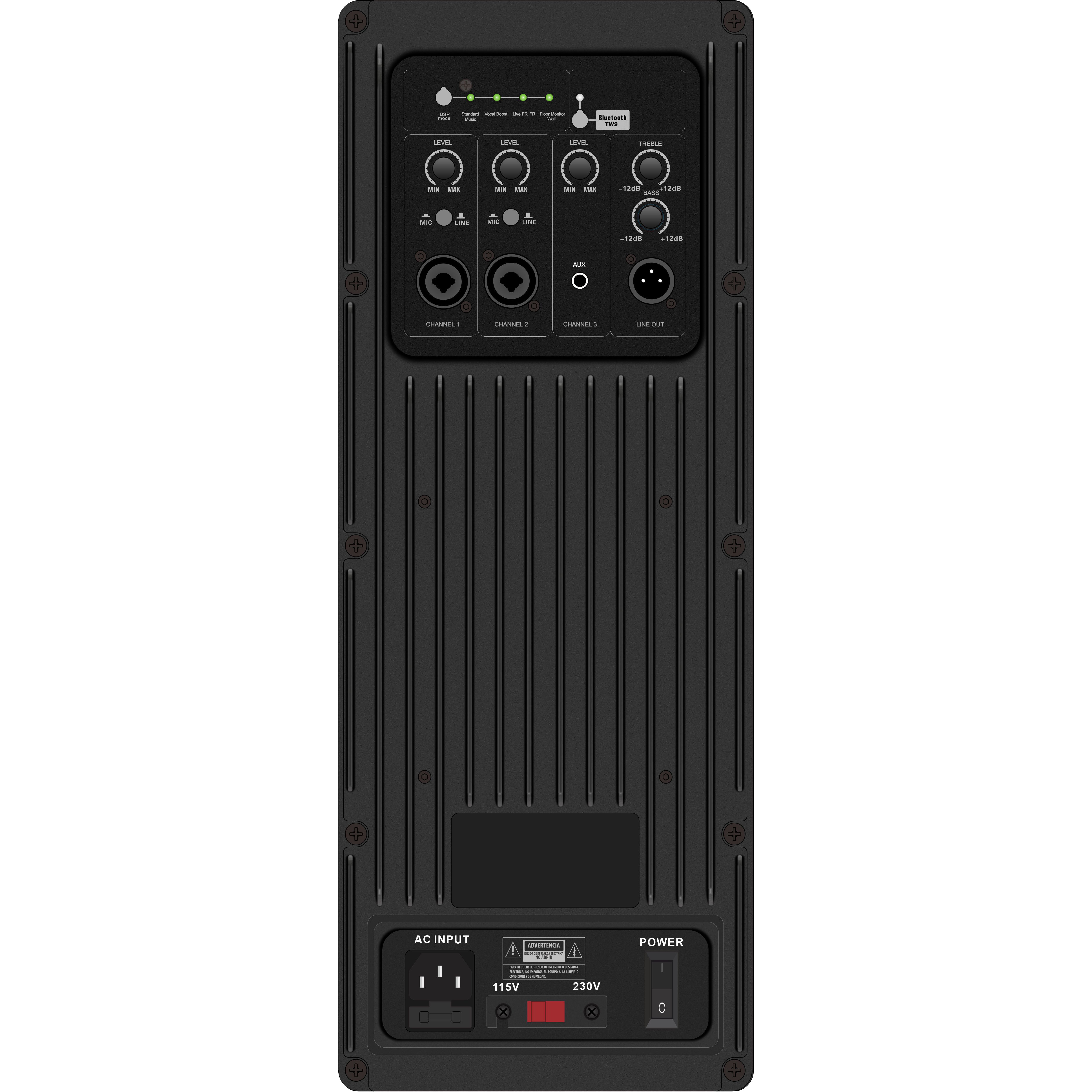
CUSTOMIZATION
We have a strong R & D team that can develop and produce products according to the drawings or samples provided by customers.

We are a professional audio company integrating R&D, production and sales. We have been focusing on the production of mixers, active power amplifiers, microphones, and related electronic components and equipment for many years.
View More
The company has professional design, production and testing teams, and can customization products according to customer needs.
View More
Established long-term and stable cooperative relations with many companies at home and abroad, and has provided OEM services for many well-known audio brands for a long time.
View More
Precipitation of more than 20 years of technical design

OEM / ODM /B2B

24-hour one-stop service
 0
0
Founded In
 0㎡
0㎡
Factory Area
 0
0
Employee Count
 0
0
Annual Output


Put your hand on the back of a 500 W powered speaker after an hour of playback. A Class A or Class AB design is usually too hot to touch; a Class D amplifier is often just warm. That one difference explains most of what matters. A Class D amplifier is a switching amplifier. Its output transistors are driven fully on or fully off at a high frequency, and the audio information is carried by the width of those pulses rather than by the linear operating point of the devices. An LC low-pass filter at the output strips the switching carrier and leaves the amplified audio. Because the transistors almost never sit in the linear region, very little energy turns into heat: typical efficiency lands between 80% and 95%, against roughly 25-30% for Class A and 50-70% for Class AB. What Is a Class D Amplifier, Exactly? The letter D does not stand for "digital." It is simply the next letter in the sequence of amplifier classes, and the audio path inside a Class D stage is analog: a pulse-width modulation (PWM) process, not a stream of ones and zeros. What is genuinely digital in a modern powered speaker is usually the DSP feeding the amplifier, not the amplifier itself. A typical Class D power amplifier module contains five functional blocks: Pulse-width modulator - compares the incoming audio with a high-frequency triangle carrier and produces a square wave whose duty cycle follows the instantaneous signal level. Gate driver and MOSFET output stage - switches the supply rails at several hundred kHz, arranged as a half bridge or, at higher power, as a full bridge (BTL) configuration. LC output filter - averages the pulse train back into an audio waveform and keeps switching residue away from the driver. Feedback network - samples the output and corrects errors, which is what separates a clean Class D design from a harsh one. Switch-mode power supply - often a PFC front end plus an LLC resonant stage in professional modules, holding the rail steady across a wide AC input range. A B C D A - PFC and LLC resonant power supply; B - PWM modulator and gate driver; C - MOSFET output stage; D - LC output filter with feedback. How a Class D Amplifier Works, Step by Step Input conditioning. The line or balanced input is buffered and, in DSP-equipped modules, passes through EQ, crossover, limiting and delay before the power stage. Modulation. A comparator mixes the audio with a triangle carrier. Loud passages produce wide pulses; silence produces a 50% duty cycle that the filter averages to zero. Switching. The gate driver turns the MOSFETs hard on and hard off, with dead time inserted so both devices in a half bridge never conduct at once. Reconstruction. The LC filter passes audio and blocks the carrier, with its cutoff placed well above 20 kHz but well below the switching frequency. Error correction. Feedback returns a scaled copy of the output to the modulator, lowering distortion and improving damping factor at the terminals. Two details decide whether the result sounds clean or coarse: switching frequency and loop design. Raising switching frequency shrinks the filter and improves high-frequency behavior, but increases switching loss and EMI. Pre-filter feedback is simple but load-sensitive; post-filter feedback corrects the filter's own errors and is standard in modules that must stay flat into 4 ohm or 8 ohm loads. Class D vs Class A, AB and H: What Actually Changes Class is not a quality rating. It describes how the output devices conduct, and that single choice drives efficiency, heat, cabinet size and power supply cost. Efficiency ranges reflect typical textbook figures and manufacturer datasheet values for each class at full rated output. Class How the output devices conduct Typical efficiency Heat and heatsink Where you still meet it A Conducting 100% of the time 25-30% Large and heavy Small-signal and high-end hi-fi AB Conducting 50-100% of the time 50-70% Moderate Analog powered mixers, value speakers H Rail voltage tracks the signal 65-80% Moderate, U-shaped aluminium radiators High-power subwoofers, touring racks D Switching on and off 80-95% Small, often the chassis itself Powered speakers, subwoofers, line array Typical full-power efficiency by amplifier class Class A25-30% Class AB50-70% Class H65-80% Class D80-95% The gap compounds quickly. At 90% efficiency, a 1000 W module turns roughly 110 W into heat; at 55% the same output means more than 800 W of heat. That is the difference between a fanless moulded cabinet and a rack unit with forced cooling. Class D was once dismissed for EMI, load-dependent frequency response and higher distortion near the top of the band. Those complaints came from low switching frequencies and pre-filter feedback, and they have largely been engineered out. What matters more than the class label today is the implementation: loop topology, switching frequency, power supply quality and thermal design. Where Class D Belongs in a Powered Speaker or Subwoofer For an OEM building active loudspeakers, the cabinet usually makes the decision. A column speaker or a moulded two-way box has no room for a linear supply and a large heatsink, so a single switching board delivering, for example, 400 W to the low-frequency driver and 100 W to the high-frequency driver is the practical answer. The same logic applies to BTL subwoofer channels, where one module can push four figures of wattage into an 8 ohm load without a fan. Three module families cover most of that ground: EON520: LP400W+HP100W PFC+LLC Resonance Wide Voltage Class D Power Amplifier Module● High Efficiency Switching Power Supply with PFC+LLC Resonance: 800W ● Self-adaptive Wide Voltage Input: 100V-240V ● Mid and Low-Frequency Power Amplifier: CLASS D 40...View Product → EON522SUB: LP 500W/4ohm LLC Resonant Active Subwoofer Power Amplifier Module●LLC Resonant High Efficiency and High Reliability Switching Power Supply: 800W ●Bass Amplifier: CLASS D 500W-4 Ohms ●U-shaped Aluminum Radiator, Stable Power Output, ...View Product → EON521+1500:LP 1500W/8ohm Pro Audio BTL Subwoofer Power Amplifier Module●LLC Resonant High Efficiency and High Reliability Switching Power Supply: 1800W ●BTL Power Amplifier: CLASS D 1500W-8 Ohm ●U-shaped Aluminum Radiator, Stable Power Ou...View Product → Matching the module to the transducer matters as much as matching wattage. A two-way module pairs a low-pass channel with a high-pass channel and expects a crossover point that suits your HF driver; a subwoofer module expects a band-limited input and the load impedance it was designed around. Mismatched impedance and crossover points are the most common reason a Class D module measures well on the bench and sounds wrong inside the cabinet. What to Check Before You Specify a Class D Module Efficiency at the load you actually use Datasheets quote peak efficiency at one operating point. Ask for the curve across 10% to 100% of rated power, and at 4 ohm, 8 ohm and bridged loads, because efficiency falls as load impedance drops. THD+N and residual noise 0.05% THD+N or lower is a normal target for a modern module. Residual noise matters more than distortion in a quiet listening room, so check the unweighted noise floor rather than only the headline figure. For a wider comparison of topologies, the amplifier class guide covers A, AB, D and H side by side. Switching frequency, EMI and dead time Higher switching frequency means a smaller filter and better high-frequency performance, but tighter dead-time control and more careful PCB layout. If the module will sit near a radio tuner or a wireless microphone receiver, ask for conducted and radiated EMI data. Power supply topology and protection PFC plus LLC resonance is the usual answer for wide-voltage operation and stable rails. Confirm that overcurrent, overvoltage, DC offset and thermal protection are included, and check what happens at brownout rather than only at nominal mains. When a standard part does not fit the cabinet, the load or the DSP feature list, the practical route is to adapt an existing platform: custom amplifier module development usually starts from a proven power stage and adjusts output channels, EQ modes and interface rather than designing a new amplifier from scratch. Class D Amplifier FAQ Q1. What is a Class D amplifier used for? Powered speakers, active subwoofers, line array modules, portable battery speakers and car audio - anywhere high output power must fit a small enclosure with limited cooling. Q2. Is a Class D amplifier better than a Class AB amplifier? For high-power powered systems, usually yes: better efficiency, less heat and a smaller footprint. Class AB remains a reasonable choice for low-power analog designs and for engineers who value its simpler EMI profile. Q3. Do Class D amplifiers sound harsh or distorted? Early models did. Modern modules using post-filter feedback and switching frequencies in the hundreds of kHz hold THD+N near 0.05% across the audio band, which is comparable to the analog amplifiers they replace. Q4. What is the efficiency of a Class D power amplifier module? Typically 80-95% at rated output. A 1000 W module therefore dissipates roughly 50-250 W as heat, while a 50-70% Class AB stage at the same output dissipates 430-1000 W. Q5. Can a Class D amplifier module drive a 4 ohm subwoofer? Only if it is specified for that load. A BTL subwoofer module optimized for 8 ohm is not interchangeable with a 4 ohm design; the wrong load can trigger overcurrent protection or overheat the output stage. Q6. What is the difference between Class D and Class H amplifiers? Class H keeps a linear output stage but varies the supply rail to follow the signal, cutting heat while preserving linear behavior. Class D switches the output stage instead, cutting heat far more and shrinking the power supply, at the cost of more care around EMI and output filtering. .article-section table{display: table!important;width:100%;border-collapse:collapse;margin-bottom:16px;} .article-section thead{display: table-header-group!important;} .article-section tbody{display: table-row-group!important;} .article-section tr{display: table-row!important;} .article-section th{display: table-cell!important;font-weight:bold;border:1px solid #cccccc;padding:8px;} .article-section td{display: table-cell!important;border:1px solid #cccccc;padding:8px;} .article-section caption{caption-side:bottom;font-size:16px;margin-bottom:12px;font-style:italic;color:#808080;} .article-section ol{margin-bottom:12px;list-style-type:decimal;list-style-position:inside;padding-left:0;} .article-section ul{margin-bottom:12px;list-style-type:disc;list-style-position:inside;} .article-section li{list-style:inherit;font-size:16px;margin-bottom:6px;} .article-section h2{font-size:22px;font-weight:bold;text-align:left;margin-bottom:12px!important;} .article-section h3{font-size:16px;font-weight:bold;text-align:left;margin-bottom:12px;} .article-section p{font-size:16px!important;margin-bottom:12px;} .article-section .chart{width:440px;margin:0 auto 18px auto;} .article-section .chart svg{display:block;width:100%;height:auto;} .article-section .chart-title{font-size:14px;font-weight:bold;color:#1c4f78;text-align:center;margin-bottom:10px;} .article-section .bar-row{display:flex;align-items:center;margin-bottom:8px;} .article-section .bar-label{flex:0 0 74px;width:74px;font-size:13px;color:#333333;} .article-section .track{flex:1;height:16px;background:#eef2f6;border-radius:8px;overflow:hidden;} .article-section .fill{display:block;height:16px;border-radius:8px;} .article-section .fill-a{width:28%;background:#9fb6c4;} .article-section .fill-ab{width:70%;background:#5b8fb9;} .article-section .fill-h{width:80%;background:#2f6f9f;} .article-section .fill-d{width:95%;background:#1c4f78;} .article-section .bar-value{flex:0 0 62px;width:62px;font-size:13px;color:#555555;text-align:right;} .article-section a[data-product-card="true"]{display:block;background:#f7fafc;border:1px solid #d7e3ec;border-radius:10px;padding:14px 16px;margin-bottom:12px;text-decoration:none;} .article-section .faq-grid{display:grid;grid-template-columns:1fr 1fr;gap:12px;margin-bottom:12px;} .article-section .faq-item{background:#f4f8fc;border-left:4px solid #2f6f9f;border-radius:8px;padding:12px 14px;} .article-section .faq-item h3{color:#1c4f78;margin-bottom:8px;} .article-section .faq-item p{margin-bottom:0;color:#2b3a45;} @media (max-width:640px){ .article-section .chart{width:100%;} .article-section .faq-grid{grid-template-columns:1fr;} } .product-card{display:block;margin:20px 0;border:1px solid #e5e7eb;border-radius:10px;overflow:hidden;font-style:normal;background:#fff} .pc-inner{display:flex;text-decoration:none;color:inherit;align-items:center;min-height:120px} .pc-img{width:160px;min-width:160px;aspect-ratio:4/3;height:auto;min-height:120px;object-fit:cover;flex-shrink:0;display:block;align-self:stretch} .pc-body{padding:12px 16px;flex:1;min-width:0;display:flex;flex-direction:column;align-self:stretch;justify-content:center} .pc-title{display:block;font-size:15px;font-weight:600;color:#111;margin:0 0 6px;line-height:1.4} .pc-desc{display:-webkit-box;font-size:13px;color:#6b7280;margin:0 0 8px;line-height:1.5;overflow:hidden;-webkit-line-clamp:2;line-clamp:2;-webkit-box-orient:vertical} .pc-cta{display:block;font-size:13px;font-weight:600;color:#11700F;margin-top:auto} .pc-inner:hover .pc-title{text-decoration:underline} .article-section a:not(.pc-inner),article a:not(.pc-inner){color:#11700F}.pc-cta{color:#11700F!important}

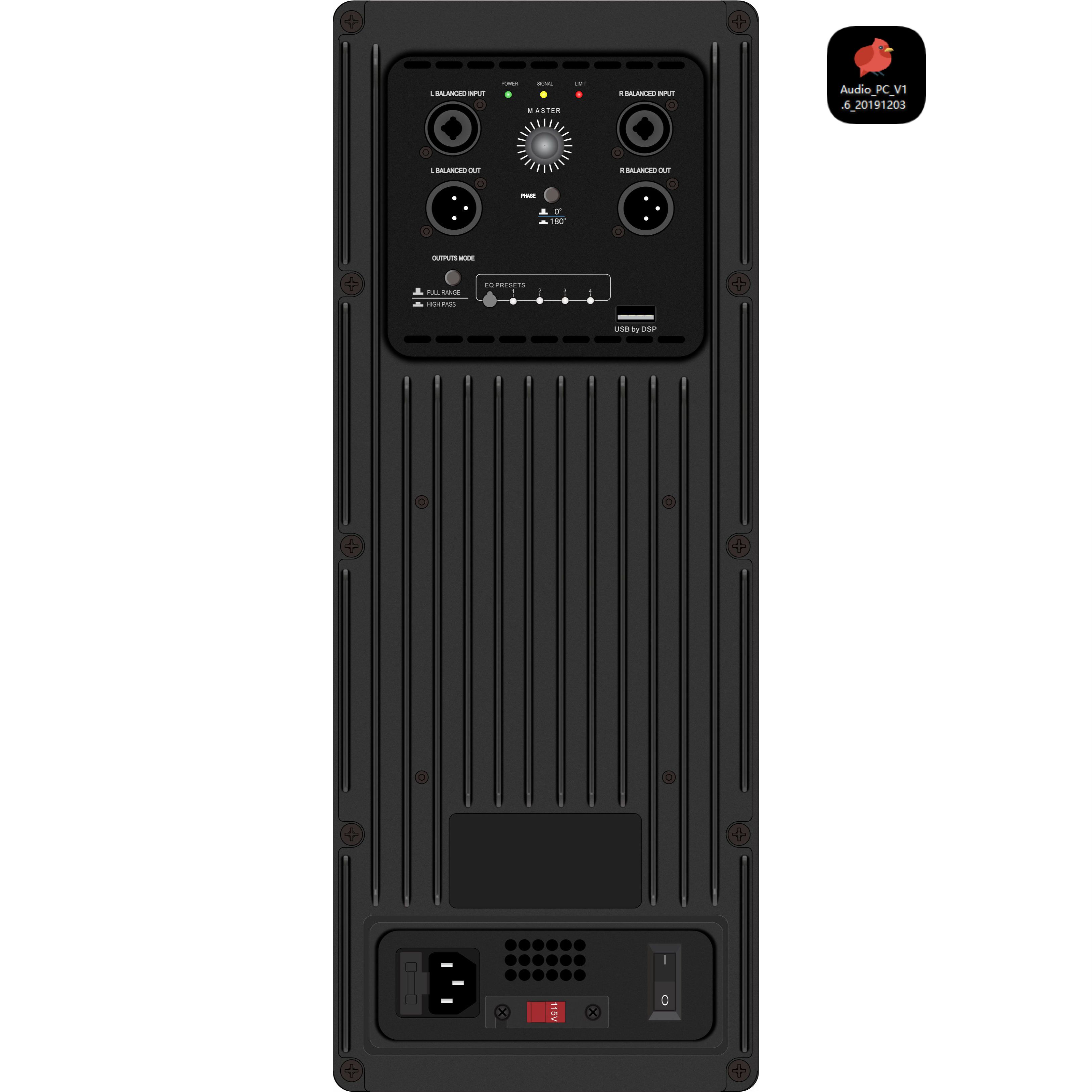
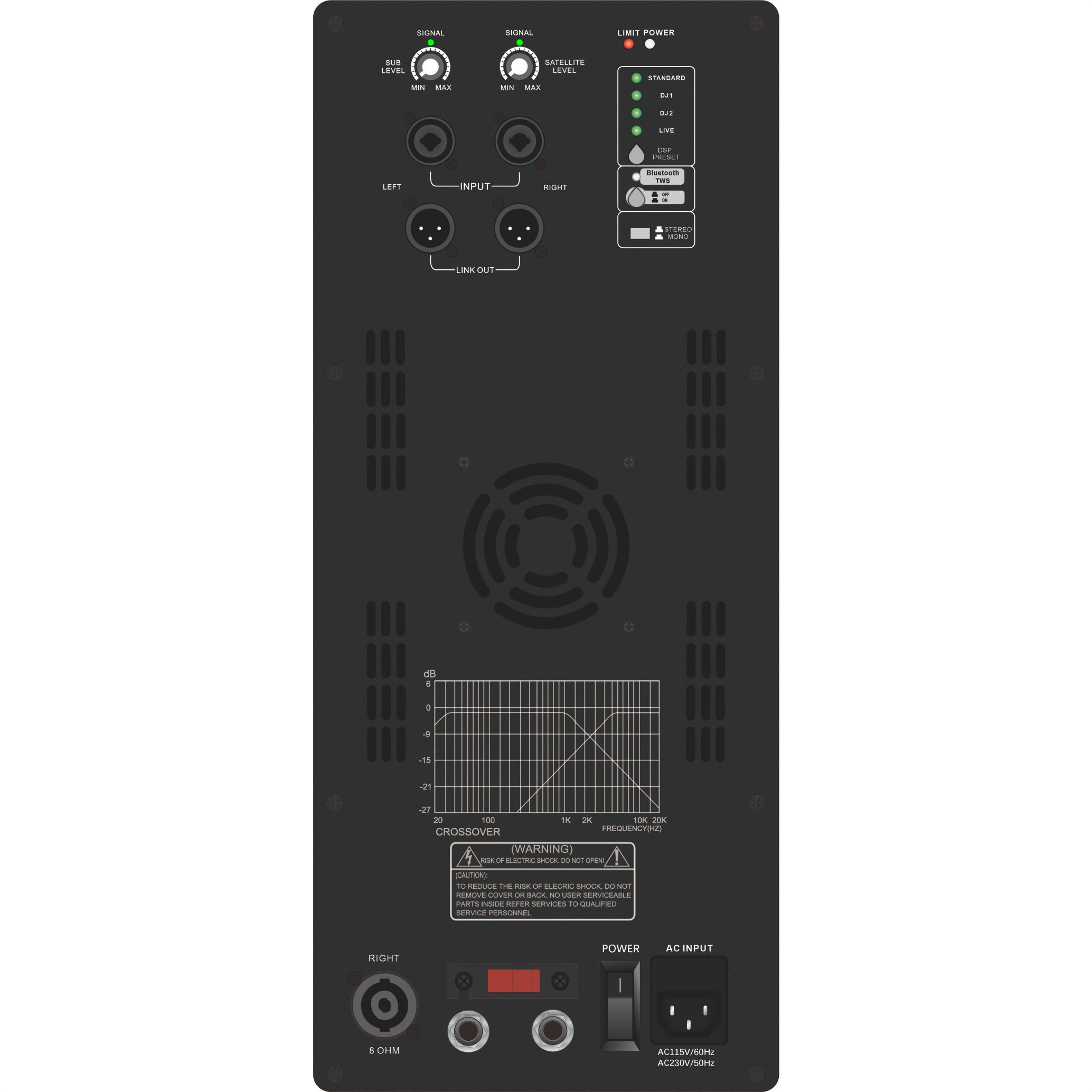
Which Class Amplifier Is Best for Sound Quality? The Short Answer A product team is finalizing a 12-inch two-way powered speaker. One prototype uses a 500 W Class D module with PFC and LLC resonant power; another uses a linear Class AB board. On pink noise they sound close; after 20 minutes the AB heatsink is hotter and its limiter engages earlier. Which class amplifier is best for sound quality? No class wins everywhere. For most modern OEM powered speakers, Class D is the best starting point for sound quality per watt. Efficiency, thermal stability, and compact integration matter as much as a distortion figure. Class AB remains strong in low-power audiophile and studio designs. Class H fits high-output PA and subwoofers. Class A is rarely the best system choice outside niche low-power listening. The class label is only the first layer. Supply, output filter, DSP preset, crossover, limiter, and heatsink decide whether a design sounds clean or strained. Class A, AB, D, and H: What Each One Does to Sound Class A keeps output devices conducting through the whole cycle. It avoids crossover distortion and can sound very pure, but typical efficiency is only 20–30%. A 50 W Class A design may dissipate more heat than a much larger Class D module. Class AB conducts for more than half the cycle, reducing Class B's crossover notch while keeping efficiency above Class A, often around 50–65%. The result is a mature linear topology with predictable clipping and low idle noise. The cost is weight: linear transformers, large capacitors, and substantial heatsinks. Class D switches at high frequency and reconstructs audio with an output filter. Efficiency often reaches 85–95%, so a compact module can deliver high power with a smaller heatsink. Good designs achieve low distortion and strong bass control; poor layout, weak EMI filtering, or a mismatched filter can still make them sound harsh. For powered speakers, line arrays, and subwoofers, Class D is usually the best balance. EON520 Class D Power Amplifier ModuleA PFC+LLC wide-voltage Class D module with 400 W low/mid and 100 W high-frequency amplification for active speaker designs.View Product → Class H adds rail switching to a linear amplifier. Rails step up only when the signal needs more voltage, cutting wasted heat at high output. It is more complex than Class AB but often more practical than a fixed-rail design for subwoofers and PA cabinets. For a deeper comparison in powered-speaker module design, see the amplifier class guide for powered-speaker modules. Sound Quality Metrics That Matter More Than the Class Name Sound quality is not a single score. Listeners hear noise, distortion, frequency response, dynamic compression, and thermal behavior together. The useful question is which class makes those parameters easier to control. Typical efficiency ranges from published power-amplifier design literature; actual results depend on topology, load, and implementation. Class Typical efficiency Sound-quality strength Main engineering cost Typical best fit A 20–30% Low crossover distortion High heat, low power density Desktop and low-power monitors AB 50–65% Low distortion at normal levels Moderate heat, heavier supply Studio monitors, powered cabinets D 85–95% Low distortion with good design Layout and EMI sensitivity Powered speakers, line arrays, subs H 70–85% Low distortion with good rail control Moderate heat, high output PA subs, high-SPL systems The table is a design map, not a ranking. A Class D amplifier with a clean supply, good output filter, and well-set limiter can outperform a poorly implemented Class AB design in every audible category. Conversely, a Class AB board with generous linear headroom can sound more natural than a Class D module running near its limit. Visualizing the Trade-offs The first chart compares typical efficiency ranges. The second is an illustrative design-priority map, not a measured sound-quality score. Typical efficiency range by amplifier class Class A 20–30% Class AB 50–65% Class D 85–95% Class H 70–85% Efficiency is power delivered to the load divided by power drawn from the supply. Ranges are typical, not guaranteed. Design-priority comparison, 1–5 scale Efficiency Thermal headroom Power density Low-frequency control Integration Design simplicity Class D Class AB Class H Illustrative comparison of design priorities, not a measured sound-quality ranking. Where Class AB and Class H Still Fit Class AB is not obsolete. In low-power home audio, studio monitors, and compact powered cabinets, a well-designed Class AB amplifier can deliver low noise, gentle clipping, and predictable thermal behavior. In a portable sealed cabinet, however, its weight and heat compete with battery space and thermal budget. Class H is the high-power compromise. It can deliver more usable output than a fixed-rail Class AB design without Class A's efficiency penalty. The trade-off is complexity: rail switching, protection, and thermal design must work together. A poorly controlled rail transition can add noise or distortion; a well-designed module is a pragmatic choice for a 15-inch subwoofer or compact line array. AMP400H+7294 Class H Amplifier ModuleA 500 W linear-supply Class H module with 400 W low/mid and 100 W Class AB high-frequency stages for speaker amplification.View Product → At high output, Class AB may add compression as it heats, while Class D may hit its current limit or clip suddenly. Both are implementation issues, not class verdicts. DSP and Integration: The Real Sound-Quality Multiplier Two amplifiers of the same class can sound different because one has a better DSP preset. A DSP module sets crossover slopes, EQ, phase alignment, and limiting before the signal reaches the amplifier. That control often improves perceived clarity and bass integration more than a class change. In a powered line array, DSP time-aligns subs and tops, protects drivers, and keeps the module out of clipping. In a portable speaker, it can apply bass boost at low volume and pull it back as the limit approaches. The class sets the efficiency envelope; the DSP decides how intelligently the system uses it. DSP1903 ADAU1701 2.1-Channel DSP ModuleAn ADAU1701-based module with preset EQ, Bluetooth TWS, and mono/stereo switching for powered line-array speaker systems.View Product → HuaGe's DSP modules use the ADAU1701 platform, with options for multi-channel input, preset EQ, USB MP3, LCD, and Bluetooth TWS. For OEM projects, platform consistency reduces firmware and integration risk. For custom presets or a specific control layout, the custom amplifier module service is the relevant starting point. Integration is easier to understand when the module is drawn as a stack. The DSP board handles signal routing and presets; the Class D power stage converts DC to audio; the PFC/LLC supply and heatsink set the thermal and safety envelope. Changing one layer changes the sound at the output. Isometric view of a Class D module stack DSP / presets Class D power stage PFC / LLC supply Heatsink Simplified isometric illustration. Actual layout depends on power level, protection, and mechanical design. Practical Selection Rules for OEM Buyers Use these rules as a starting filter, then validate with measurements and listening tests. Compact powered speaker, portable, or line array: start with Class D. Prioritize PFC/LLC supply, output filter quality, and DSP limiting. Low-power audiophile or studio monitor: Class AB remains competitive when idle noise and linear clipping behavior matter. High-output subwoofer or PA cabinet: evaluate Class H when Class D current limit or supply cost becomes impractical. Any class: require THD vs frequency at rated power, thermal rise at 1/8 and 1/3 power, and limiter behavior. These tests reveal more than a class label. Also check the load. A module rated at 4 ohms may behave differently at 8 ohms or 2 ohms. Protection thresholds, fan noise, and heatsink orientation can change perceived sound quality in the final cabinet. Ask for the test condition, not just the headline wattage. Frequently Asked Questions Q1: Is Class D better than Class AB for sound quality in powered speakers? For most powered speakers, a well-designed Class D module is the better system choice because it runs cooler and allows more DSP and power in a compact box. Class AB can still sound excellent in low-power designs with generous linear headroom. Q2: Do Class H amplifiers sound worse than Class AB? Not inherently. Class H adds rail switching for efficiency at high output. A good implementation sounds clean; a poor one can add noise or distortion. Audition at realistic SPL and check thermal behavior. Q3: What does a DSP amplifier module change in sound quality? It controls crossover, EQ, phase, and limiting before amplification. That often improves clarity, bass integration, and protection more than changing amplifier class alone. Q4: Which amplifier class is best for subwoofers? Class D is usually the most practical for compact subwoofers; Class H is a strong option for high-output PA subwoofers. The best result depends on the driver, box, supply, and limiter. Q5: How much power do I need for clear PA sound? Power is only one factor. Sensitivity, coverage, crossover design, and limiter settings matter. Choose a module with headroom for the real program material, then verify thermal rise. Q6: Can a Class D amplifier module deliver audiophile-grade clarity? Yes, when the output filter, supply, grounding, and feedback are well designed. Modern Class D can achieve low distortion and low noise, but implementation quality is decisive. .article-section{box-sizing:border-box;padding:26px 28px;margin:0 0 18px;border-radius:12px;background:#ffffff;color:#1b2a3a;box-shadow:0 2px 10px rgba(9,40,62,.06);overflow:hidden;} .article-section:nth-of-type(even){background:#f3f8fb;} .article-section:first-of-type{background:#0d2b43;color:#e9f2f7;} .article-section:first-of-type h2{color:#ffffff;border-left-color:#f2a33a;} .article-section:first-of-type p{color:#d7e6ef;} .article-section h2{font-size:22px;font-weight:bold;text-align:left;margin-bottom:12px!important;color:#0b4f6c;border-left:6px solid #0a7c86;padding-left:12px;line-height:1.35;} .article-section h3{font-size:16px;font-weight:bold;text-align:left;margin-bottom:12px;} .article-section p{font-size:16px!important;margin-bottom:12px;line-height:1.65;} .article-section a{color:#0a6f86;text-decoration:underline;text-underline-offset:2px;} .article-section table{display: table!important;width:100%;border-collapse:collapse;margin:18px 0 12px;font-size:15px;} .article-section thead{display: table-header-group!important;} .article-section tbody{display: table-row-group!important;} .article-section tr{display: table-row!important;} .article-section th{display: table-cell!important;font-weight:bold;border:1px solid #cccccc;padding:8px;} .article-section td{display: table-cell!important;border:1px solid #cccccc;padding:8px;} .article-section caption{caption-side:bottom;font-size:16px;margin-bottom:12px;font-style:italic;color:#808080;} .article-section ol{margin-bottom:12px;list-style-type:decimal;list-style-position:inside;padding-left:0;} .article-section ul{margin-bottom:12px;list-style-type:disc;list-style-position:inside;} .article-section li{list-style:inherit;font-size:16px;margin-bottom:6px;line-height:1.6;} .viz-chart{width:440px;margin:22px auto;padding:14px 14px 10px;background:#f9fcfe;border:1px solid #dbe8ef;border-radius:10px;box-sizing:border-box;} .viz-chart h3{margin-bottom:8px;} .bar-chart{display:block;margin-top:8px;} .bar-row{display:grid;grid-template-columns:74px 1fr 58px;gap:8px;align-items:center;margin-bottom:10px;font-size:13px;color:#17384f;} .bar-track{height:14px;background:#e3edf3;border-radius:7px;overflow:hidden;} .bar-fill{height:100%;border-radius:7px;} .fill-a{width:28%;background:#7f8fa0;} .fill-ab{width:60%;background:#3f7f9b;} .fill-d{width:92%;background:#0a7c86;} .fill-h{width:80%;background:#d98a2b;} .viz-note{font-size:13px!important;color:#607080;margin-bottom:0!important;line-height:1.45;} .radar-label{font-size:11px;fill:#29495f;} .radar-grid{fill:none;stroke:#c9dbe5;stroke-width:1;} .radar-axis{stroke:#d6e3ea;stroke-width:1;} .radar-d{fill:rgba(10,124,134,.18);stroke:#0a7c86;stroke-width:2;} .radar-ab{fill:rgba(63,127,155,.10);stroke:#3f7f9b;stroke-width:2;stroke-dasharray:5 3;} .radar-h{fill:rgba(217,138,43,.10);stroke:#d98a2b;stroke-width:2;stroke-dasharray:3 3;} .chart-legend{display:flex;gap:14px;justify-content:center;align-items:center;font-size:12px;color:#29495f;margin:4px 0 6px;} .key{display:inline-block;width:10px;height:10px;border-radius:2px;margin-right:4px;vertical-align:middle;} .key-d{background:#0a7c86;} .key-ab{background:#3f7f9b;} .key-h{background:#d98a2b;} .iso-chart svg{width:100%;height:auto;display:block;} .iso-label{font-size:11px;fill:#17384f;font-weight:600;} .iso-line{stroke:#6c8fa5;stroke-width:1;stroke-dasharray:3 2;} .faq-grid{display:grid;grid-template-columns:repeat(2,1fr);gap:14px;} .faq-item{padding:14px;border-radius:10px;background:#eef8f9;border-left:4px solid #0a7c86;} .faq-item:nth-child(4n+2){background:#fff6e8;border-left-color:#d98a2b;} .faq-item:nth-child(4n+3){background:#edf4fb;border-left-color:#3f7f9b;} .faq-item:nth-child(4n+4){background:#f4f8ee;border-left-color:#6f9a4a;} .faq-item h3{margin-bottom:8px;color:#0b4f6c;} .faq-item p{margin-bottom:0;} @media (max-width:640px){ .article-section{padding:20px 18px;} .viz-chart{width:100%;} .bar-row{grid-template-columns:64px 1fr 52px;} .faq-grid{grid-template-columns:1fr;} } .product-card{display:block;margin:20px 0;border:1px solid #e5e7eb;border-radius:10px;overflow:hidden;font-style:normal;background:#fff;box-shadow:0 0 5px rgba(31,41,55,.08)} .pc-inner{display:flex;text-decoration:none;color:inherit;align-items:center;min-height:148px} .product-card .pc-img{width:auto!important;min-width:0!important;max-width:min(36%,240px)!important;height:auto!important;min-height:0!important;max-height:148px!important;aspect-ratio:auto!important;object-fit:contain!important;flex:0 0 auto;display:block;align-self:center} .pc-body{padding:12px 16px;flex:1;min-width:0;display:flex;flex-direction:column;align-self:stretch;justify-content:center} .pc-title{display:block;font-size:15px;font-weight:600;color:#111;margin:0 0 6px;line-height:1.4} .pc-desc{display:-webkit-box;font-size:13px;color:#6b7280;margin:0 0 8px;line-height:1.5;overflow:hidden;-webkit-line-clamp:2;line-clamp:2;-webkit-box-orient:vertical} .pc-cta{display:block;font-size:13px;font-weight:600;color:#11700F;margin-top:auto} .pc-inner:hover .pc-title{text-decoration:underline} .article-section a:not(.pc-inner),article a:not(.pc-inner){color:#11700F}.pc-cta{color:#11700F!important}
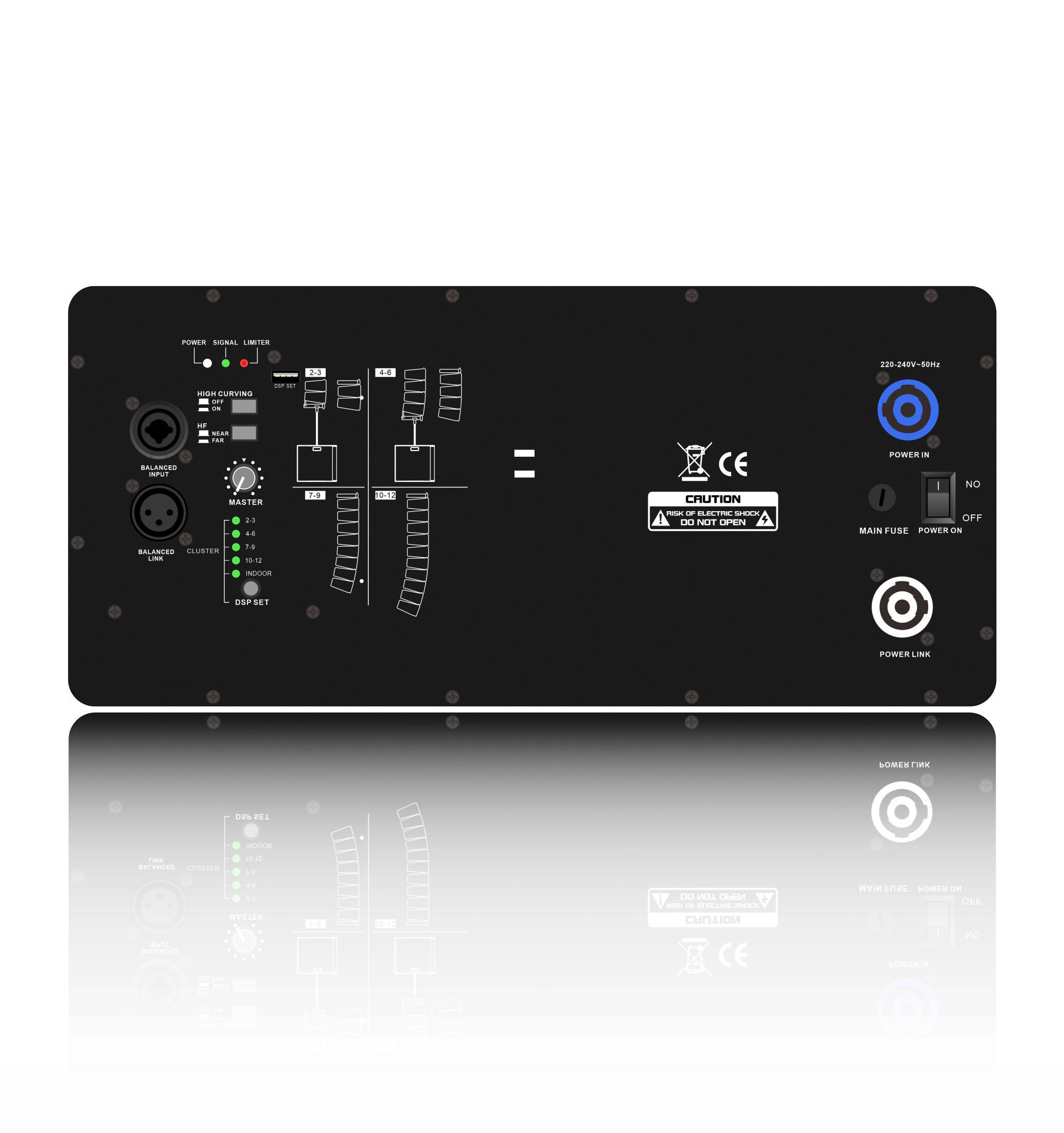
A 500 W Class D amplifier module and a similar-power Class AB module dropped into the same 12-inch powered speaker behave very differently before anyone even starts talking about sound. The Class D board runs warm after two hours of programme material; the Class AB board is hot to the touch, and the battery pack behind it drains noticeably faster. The question of Class D sound quality usually arrives later, once the module is measured properly — and by that point, most of the old complaints have already shrunk into a much shorter list. That shorter list is the subject of this article. It is written for engineers and purchasing teams choosing amplifier modules for powered speakers, line arrays, subwoofers and portable systems — the people who need to separate the parts of "Class D sound" that are genuine design trade-offs from the parts that were simply inherited from the early 2000s. The Short Answer on Class D Sound Quality A well-designed Class D module is transparent enough that, inside a modern powered speaker, it is difficult to distinguish from a good Class AB module of the same power. It is also measurably better at the things an amplifier is judged on in real deployments: thermal stability, output consistency under load, and long-duration performance at high volume. The differences that remain are not caused by the letter D. They come from four design decisions: The switching frequency and the output filter built around it. The power supply topology, specifically whether the module uses power factor correction and an LLC resonant stage. The signal chain in front of the amplifier, including DSP, EQ and limiting. Thermal design and board layout. The practical consequence is that comparing "Class D versus Class AB" at catalogue level tells you almost nothing. Compare the power supply, the filter and the DSP, and the sound quality question largely answers itself. Why Class D Earned a Bad Reputation for Sound The criticism was justified once, and it is worth knowing exactly why, because the same failure modes still appear in inexpensive modules today. Output filter roll-off. Early modules switched at roughly 50–150 kHz, which forced the output filter to begin cutting well below 20 kHz. The result was a rolled-off top end that listeners described as dull or closed-in. Dead-time distortion. The blanking interval that prevents shoot-through in the output stage introduces a nonlinear error. Without compensation, that error lands in the treble, exactly where the ear is most sensitive to it. Poor supply rejection in open-loop designs. With no feedback loop, ripple on the supply rail appears directly at the output, and rail sag under load turns into audible compression. EMI from careless switching layout. Noise coupled into the preamp stage and input cabling, producing hiss and buzz that had nothing to do with the audio path itself. Every one of these problems has a known engineering answer: higher switching frequencies, dead-time compensation, closed-loop modulation and disciplined EMI layout. What matters for a buyer is not whether Class D can sound good — it clearly can — but whether the specific module in front of you has had those answers applied. The Four Things That Actually Decide Class D Sound Quality Switching Frequency and the Output Filter The switching frequency sets how much room the output filter has to work in. Professional Class D modules commonly switch somewhere between 300 kHz and 1 MHz. The higher the switching frequency, the higher the filter corner can sit, which keeps phase and amplitude behaviour clean up to and beyond 20 kHz. The cost is greater switching loss and a more demanding EMI design. For an OEM project, the practical checks are straightforward: What switching frequency does the module specify? Where does the output filter corner sit relative to 20 kHz? Can the supplier provide a measured 20 Hz–20 kHz response curve rather than a printed "±3 dB" claim? Power Supply Topology: PFC, LLC and Why They Appear in Datasheets A Class D output stage draws current in switching pulses, so the amplifier is bounded by the quality of the rail feeding it. Two supply features are worth knowing by name. Power factor correction (PFC) keeps the module stable across a wide mains voltage range, which matters for products exported to markets where the grid is not tightly regulated. LLC resonance is a soft-switching topology. It lowers switching loss and EMI, produces cleaner output ripple, and holds efficiency well under heavy load. In practice, the same Class D stage fed by a basic flyback supply and by an LLC resonant supply will not behave like the same amplifier — the difference shows up first in bass control and in how composed the system stays during loud passages. EON520: LP400W+HP100W PFC+LLC Resonance Wide Voltage Class D Power Amplifier Module● High Efficiency Switching Power Supply with PFC+LLC Resonance: 800W ● Self-adaptive Wide Voltage Input: 100V-240V ● Mid and Low-Frequency Power Amplifier: CLASS D 40...View Product → Modules that combine both approaches — a PFC plus LLC resonant design rated LP 400 W / HP 100 W with wide-voltage input, for example — exist specifically to hold output quality steady when the mains supply moves. DSP and the Signal Chain in Front of the Amplifier By the time a powered speaker reaches the listener, the sound is the product of the DSP and the amplifier together, not the amplifier alone. That is why DSP modules built on the ADAU1701 chip are so common in active speakers: crossover, EQ, limiting and preset switching all live in a single device. Three DSP behaviours translate directly into perceived Class D sound quality: Limiting. A properly set limiter keeps the amplifier out of hard clipping, which reduces bass distortion at high volume compared with a module relying on the amplifier's own protection. Protection logic. Speaker and thermal protection that ramps output down instead of cutting it abruptly avoids the audible dropouts that make a product feel unreliable. Presets matched to the cabinet. Preset EQ modes are only useful when they were tuned for the specific driver and enclosure, not copied from a reference design. DSP1903: 4 Customized Preset EQ Modes 2.1CH Linear Array Speaker ADAU1701 Based DSP Functi● Designed based on ADAU1701 sound audio system. Use sigma studio DSP software to configure signal processing parameters. ● Selectable four customized preset modes whi...View Product → A multi-channel DSP front end offering several customised preset EQ modes is a typical example: the amplifier stage stays identical, but the tonal behaviour of the finished speaker changes completely. Thermal Design and Board Layout Class D generates far less heat than Class AB, but it still generates heat. A module that enters thermal rollback after twenty minutes will sound soft and compressed no matter how good its bench measurements look. What to verify: Heatsink area and airflow path matched to the real enclosure. Protection thresholds set with enough margin that normal programme material never triggers them. Burn-in data from long-duration full-load testing, not just a short bench run. This is also the part of the evaluation that cannot be done from a datasheet. A supplier running its own SMT lines, assembly lines and an audio testing room can produce burn-in logs and impedance-load test results; a trading company usually cannot. The manufacturing setup behind the module is worth an on-site visit before committing to a production run. Class D, Class AB and Class H Side by Side The choice is rarely about which class sounds best in isolation. It is about which one fits the product's thermal envelope, battery budget, weight target and price point. Efficiency ranges are widely cited in audio engineering literature and amplifier design application notes; actual figures vary with topology, load impedance and output level. Amplifier class Typical full-power efficiency Distortion behaviour in modern designs Heat and physical size Typical module applications Class A 20–30% Very low crossover distortion, warm tonality Very high heat, large heatsinks Small audiophile amplifiers Class AB 50–70% Low and well understood, easy to tune Moderate to high heat Home audio, smaller powered speakers Class H 65–80% Clean at high output thanks to rail tracking Moderate heat, linear transformer required High-power subwoofers, installed sound Class D 80–95% Transparent when filtering, supply and feedback are done well Low heat, compact footprint Portable, battery, line array and subwoofer modules Typical Full-Power Efficiency by Amplifier Class Class A25% Class AB60% Class H75% Class D90% Indicative ranges; real numbers depend on topology, load and output level. The efficiency gap is not a marketing figure — it is the reason a battery-powered speaker can run for a full evening, and the reason a line array cabinet can carry more channels in a smaller box. If you want a deeper walkthrough of how these trade-offs play out in real products, this comparison of Class D and Class AB efficiency and sound quality covers the same ground from a design perspective. Specifications Worth Writing Into a Purchase Agreement Module catalogue pages tend to list power, impedance and a handful of features. If sound quality is a contractual requirement, ask for these instead: THD+N at rated power and at 1 W. The 1 W figure is the one that exposes idle noise floor and crossover behaviour. Frequency response measured at the speaker terminals, not at the line input, because the output filter and the load interact. Output impedance or damping factor across 20 Hz–20 kHz. This is what separates a module with tight bass from one that sounds loose. Power supply topology and switching frequency. PFC present or not, LLC resonant or hard-switched. Protection thresholds and recovery behaviour. Ask for actual trigger points, not simply confirmation that protection exists. Thermal test data at full load over at least one hour. Suppliers who design and build their own modules can usually answer these questions with test data. Suppliers who resell cannot, and that difference shows up in the field long after the sample has been approved. Where Class D Modules Make the Most Sense Class D stopped being a compromise in every application where efficiency and size matter more than absolute thermal headroom, and that list keeps growing. Portable and battery-powered speakers. Efficiency is the entire design constraint. A Class AB module would need a substantially larger battery pack for the same play time. Active line array systems. Multi-channel modules with LLC resonant supplies fit the 2.1 and 2.2 channel configurations these systems use, and low heat output lets designers pack more channels into a smaller cabinet. Powered subwoofers. BTL Class D output stages deliver high power into low-impedance loads without the heatsink mass a linear design would require. A dedicated subwoofer module rated LP 1500 W into 8 ohms illustrates what that looks like in production hardware. Column speakers and installed sound. Low heat means the amplifier can be sealed inside the enclosure with no additional ventilation. EON521+1500:LP 1500W/8ohm Pro Audio BTL Subwoofer Power Amplifier Module●LLC Resonant High Efficiency and High Reliability Switching Power Supply: 1800W ●BTL Power Amplifier: CLASS D 1500W-8 Ohm ●U-shaped Aluminum Radiator, Stable Power Ou...View Product → Signal and Power Path Inside a Class D Powered Speaker Module PFC + LLC Power Supply DSP Front End ADAU1701 Class D Stage + Output Filter A Practical Evaluation Checklist for a Production Project Before freezing a Class D module into a production bill of materials, run it through the same sequence every time: Confirm rated power at the actual load impedance of your speaker, not the impedance used in the headline specification. Measure frequency response at the speaker terminals with the real load connected. Run a one-hour full-power burn-in and log heatsink temperature alongside any protection activity. Play programme material with heavy low-frequency content at high level and listen specifically for compression and limiter pumping. Check idle noise with the input shorted; this is where inexpensive modules are exposed. Verify behaviour at the low end of the mains voltage range if the product ships to markets with unstable supply. Confirm that preset EQ modes and protection thresholds can be customised for your cabinet. Customisation is a normal part of the module business, not an exception, and a supplier who will not adjust a preset is unlikely to support the product after launch. Frequently Asked Questions Q1. Is Class D amplifier sound quality actually worse than Class AB? No. A well-designed Class D amplifier module is transparent enough to be hard to distinguish from a comparable Class AB module. Perceived quality depends far more on switching frequency, output filter design, supply topology and DSP tuning than on the amplifier class itself. Q2. What switching frequency should a Class D amplifier module have? Professional modules commonly switch between 300 kHz and 1 MHz. Higher frequencies push the output filter corner further above the audio band and improve treble behaviour, at the cost of higher switching loss and stricter EMI layout requirements. Q3. Does a Class D module need a DSP to sound good? Not strictly, but in a powered speaker the DSP shapes the final result through crossover, EQ and limiting. A properly configured limiter alone prevents hard clipping and noticeably reduces bass distortion at high volume. Q4. Why does a Class D amplifier lose bass control at high volume? Usually it is the power supply, not the amplifier stage. Rail sag under heavy load reduces output headroom and effective damping. An LLC resonant supply with adequate bulk capacitance holds the rail far more stably than a basic hard-switched supply. Q5. Can Class D amplifier modules drive both 4-ohm and 8-ohm speakers? Many can, but rated power differs between the two. Always confirm power ratings at the impedance your cabinet actually presents, and check that protection thresholds were set for that load rather than copied from another model. Q6. How should sound quality be tested before mass production? Measure THD+N at 1 W and at rated power, take frequency response at the speaker terminals with the real load, run at least one hour of full-power burn-in, and listen for limiter pumping on bass-heavy material. .article-section table{display: table!important;width:100%;border-collapse:collapse;margin-bottom:16px;} .article-section thead{display: table-header-group!important;} .article-section tbody{display: table-row-group!important;} .article-section tr{display: table-row!important;} .article-section th{display: table-cell!important;} .article-section td{display: table-cell!important;} .article-section caption{caption-side:bottom;font-size:16px;margin-bottom:12px;font-style:italic;color:#808080;} .article-section th{font-weight:bold;border:1px solid #cccccc;padding:8px;} .article-section td{border:1px solid #cccccc;padding:8px;} .article-section ol{margin-bottom:12px;list-style-type:decimal;list-style-position:inside;padding-left:0;} .article-section ul{margin-bottom:12px;list-style-type:disc;list-style-position:inside;} .article-section li{list-style:inherit;font-size:16px;margin-bottom:6px;} .article-section h2{font-size:22px;font-weight:bold;text-align:left;margin-bottom:12px!important;} .article-section h3{font-size:16px;font-weight:bold;text-align:left;margin-bottom:12px;} .article-section p{font-size:16px!important;margin-bottom:12px;} .chart-box{width:440px;margin:0 auto 20px;} .diagram-box{width:440px;margin:0 auto 20px;} .diagram-box svg{width:100%;height:auto;display:block;} .chart-title{font-size:14px;font-weight:bold;text-align:center;margin-bottom:12px;color:#1f4e79;} .bar-row{display:flex;align-items:center;margin-bottom:8px;} .bar-name{flex:0 0 78px;font-size:13px;color:#444444;} .bar-track{flex:1 1 auto;height:16px;background:#eef2f7;border-radius:2px;overflow:hidden;} .bar-fill{display:block;height:16px;border-radius:2px;} .bf-a{background:#c8d6e4;} .bf-ab{background:#9dbcd8;} .bf-h{background:#6f9ec8;} .bf-d{background:#2f6fb5;} .bar-pct{flex:0 0 42px;text-align:right;font-size:13px;color:#444444;} .chart-note{font-size:12px;color:#808080;font-style:italic;text-align:center;margin-bottom:0;} .faq-grid{display:grid;grid-template-columns:1fr 1fr;gap:14px;} .faq-item{background:#f3f7fb;border-left:4px solid #2f6fb5;border-radius:4px;padding:12px 14px;} .faq-q{font-size:15px;font-weight:bold;color:#1f4e79;margin-bottom:6px;} .faq-a{font-size:14px;color:#333333;line-height:1.5;} @media (max-width:640px){ .chart-box{width:100%;} .diagram-box{width:100%;} .faq-grid{grid-template-columns:1fr;} } .product-card{display:block;margin:20px 0;border:1px solid #e5e7eb;border-radius:10px;overflow:hidden;font-style:normal;background:#fff} .pc-inner{display:flex;text-decoration:none;color:inherit;align-items:center;min-height:120px} .pc-img{width:160px;min-width:160px;aspect-ratio:4/3;height:auto;min-height:120px;object-fit:cover;flex-shrink:0;display:block;align-self:stretch} .pc-body{padding:12px 16px;flex:1;min-width:0;display:flex;flex-direction:column;align-self:stretch;justify-content:center} .pc-title{display:block;font-size:15px;font-weight:600;color:#111;margin:0 0 6px;line-height:1.4} .pc-desc{display:-webkit-box;font-size:13px;color:#6b7280;margin:0 0 8px;line-height:1.5;overflow:hidden;-webkit-line-clamp:2;line-clamp:2;-webkit-box-orient:vertical} .pc-cta{display:block;font-size:13px;font-weight:600;color:#11700F;margin-top:auto} .pc-inner:hover .pc-title{text-decoration:underline} .article-section a:not(.pc-inner),article a:not(.pc-inner){color:#11700F}.pc-cta{color:#11700F!important}
Phone
+86-18815298889
Tel
+86-574-87781767
Fax
+86-574-87787735
Add
Xiyun Road, Xiepu, Zhenhai, Ningbo, Zhejiang, China
